Chronic Pain & Post-Surgical Rehabilitation
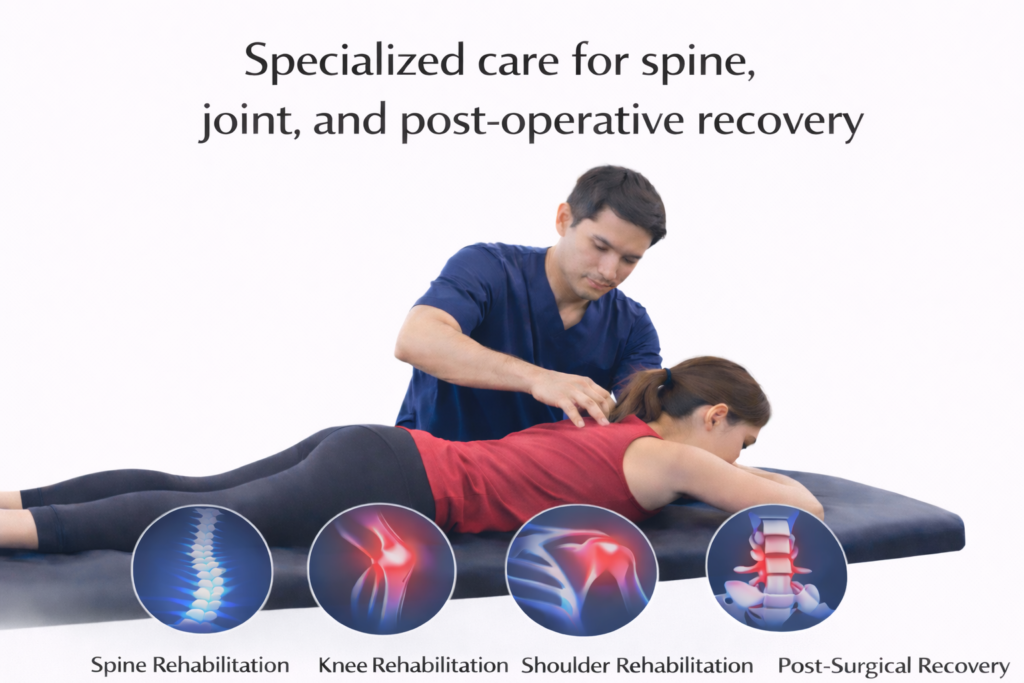
Restoring Movement, Reducing Pain, Rebuilding Function
Many individuals continue to experience pain and movement
limitations long after an injury or surgery.
In these cases, pain is often not caused by a single damaged structure, but by muscle
weakness, stiffness, poor movement patterns, and altered posture that place
ongoing stress on the body.
Our Chronic Pain & Post-Surgical Rehabilitation program focuses on restoring how the body moves, supports itself, and distributes load, rather than simply treating symptoms.
Our rehabilitation approach
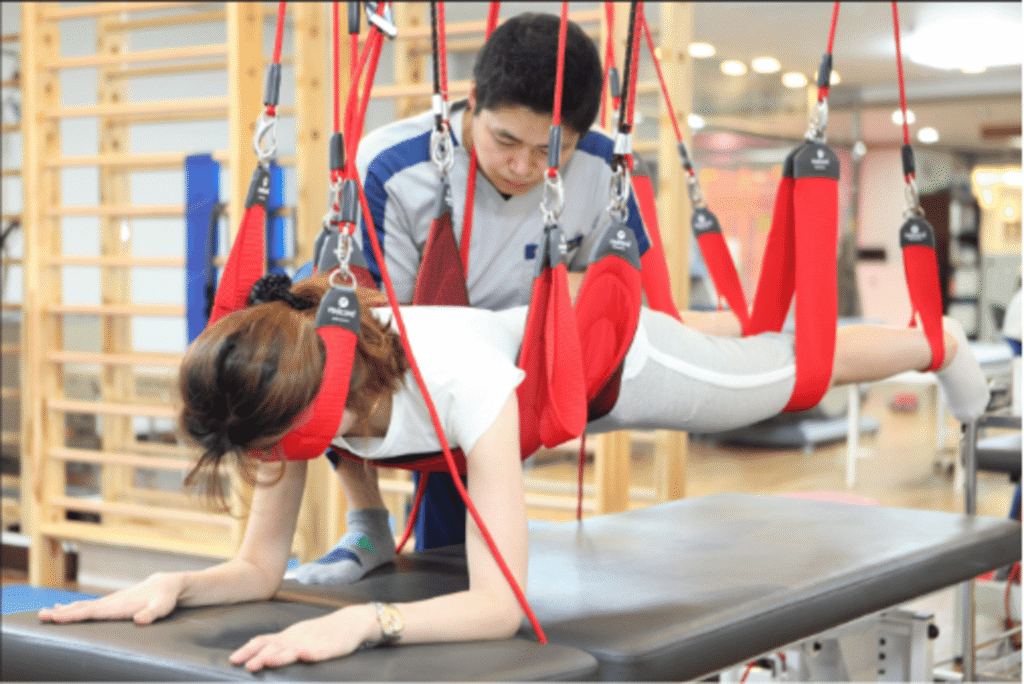
We provide an individualized, posture- and movement-based rehabilitation program that may include:
Movement and postural assessment to identify compensations and imbalances
Manual therapy to address soft tissue restriction and joint mobility
Targeted therapeutic exercises to improve strength, flexibility, and postural support
Functional retraining to help restore efficient movement in daily activities
Progressive activity re-integration to support safe return to work, sports, or daily life
Our goal is to help the body move more efficiently and with less unnecessary strain, supporting a smoother recovery process.
Supporting long-term recovery
By improving posture, muscle balance, and movement control, rehabilitation can help:
Reduce mechanical stress on healing tissues
Improve movement confidence
Support safer and more efficient daily activity
This approach is designed to promote sustainable improvement, rather than short-term relief alone.
Chronic Neck & Low Back Pain Clinic
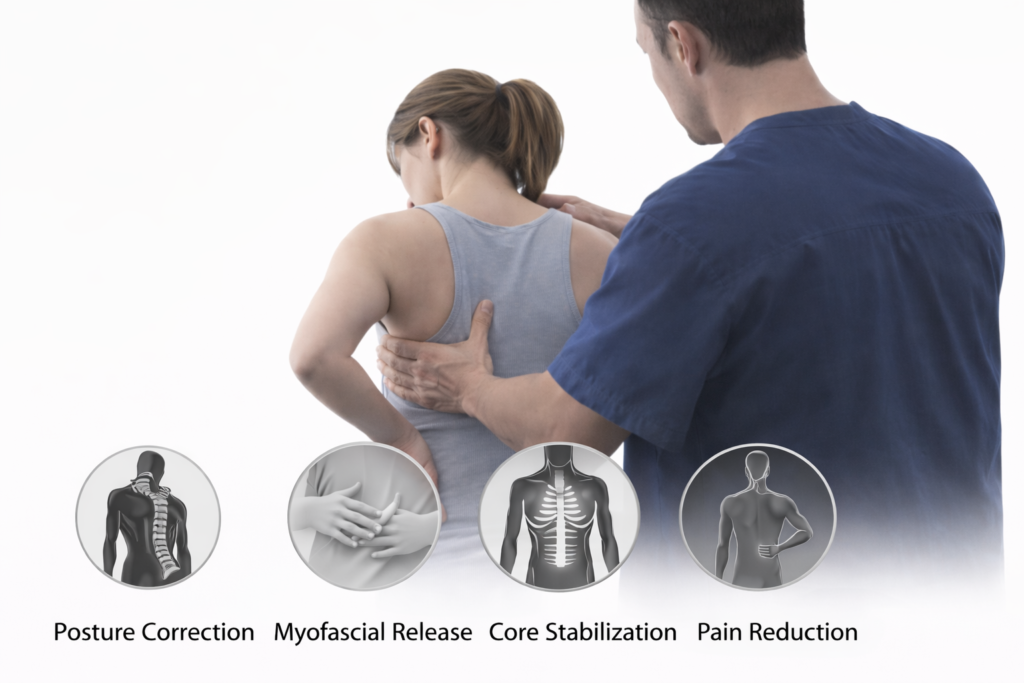
Improving Posture, Reducing Mechanical Stress, Restoring Movement
Chronic neck and low back pain often develop gradually as a result of poor posture, muscle imbalance, and inefficient movement patterns that place ongoing stress on the spine.
Rather than being caused by a single structure, persistent pain is frequently related to how the body supports itself and distributes load during daily activities.
Why pain becomes persistent
When posture is altered, certain muscles may become
overworked while others become weak or underactive.
This imbalance can lead to:
Increased mechanical stress on the cervical and lumbar spine
Reduced shock absorption through the muscles
Joint stiffness and soft tissue restriction
Compensatory movement patterns
Over time, these factors may contribute to ongoing discomfort, stiffness, and reduced functional capacity.
Tennis & Golfer’s Elbow Clinic
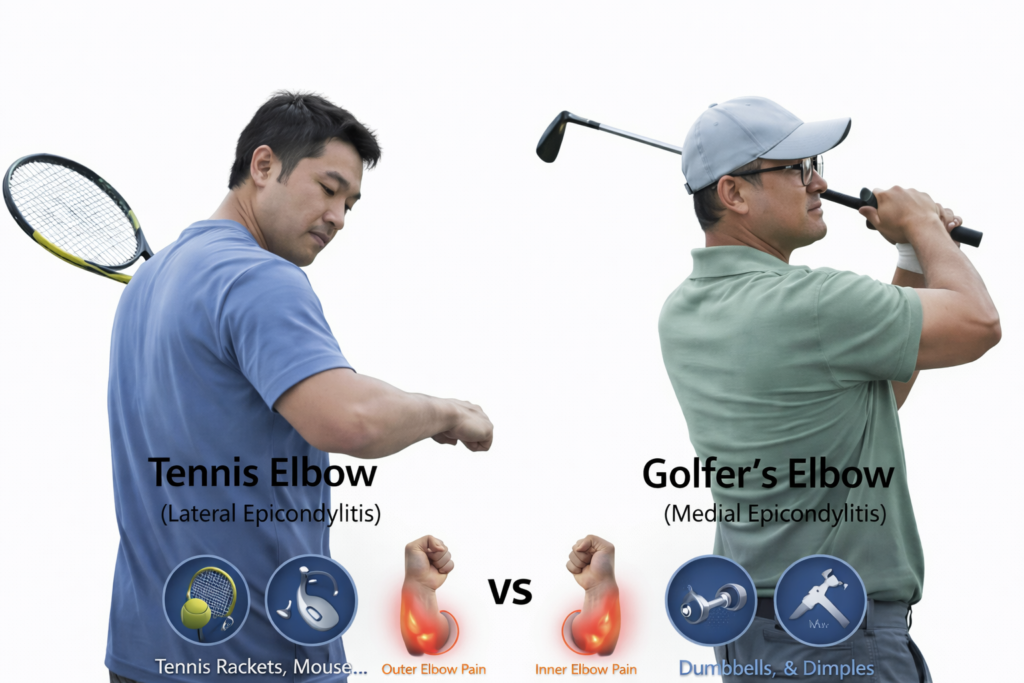
Restoring Arm Function, Reducing Overuse Strain
Tennis elbow (lateral epicondylitis) and golfer’s
elbow (medial epicondylitis) are common overuse conditions that affect the
tendons and muscles around the elbow.
These conditions often develop not only from repetitive arm use, but also from poor
posture, shoulder instability, and inefficient movement patterns that place
excessive strain on the forearm and elbow.
Frozen Shoulder Clinic
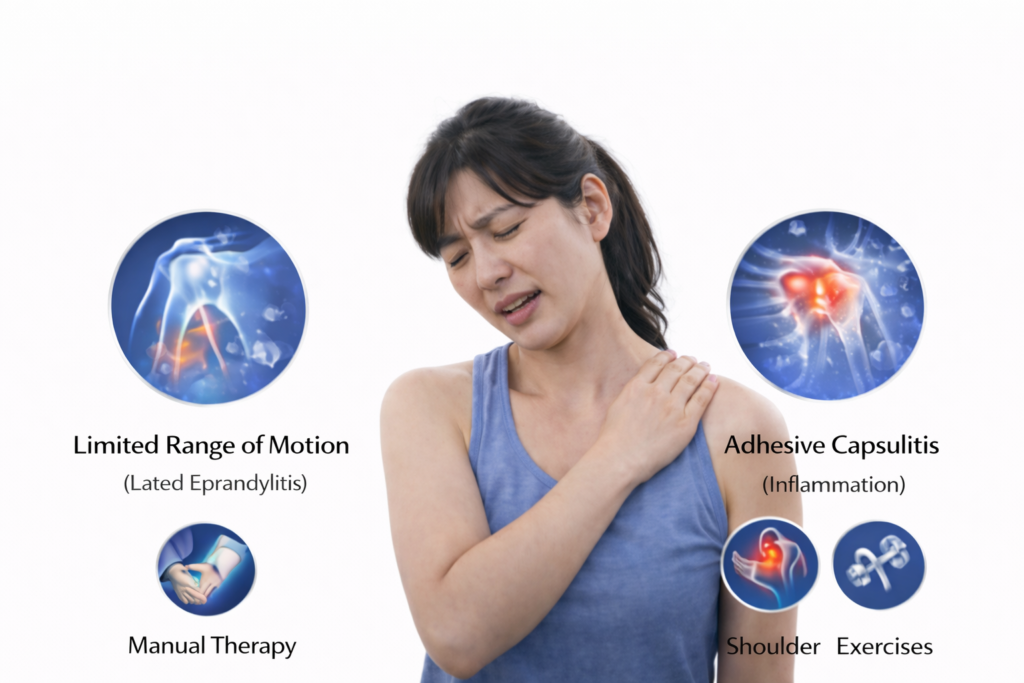
Frozen shoulder (adhesive capsulitis) is a condition
characterized by progressive stiffness, pain, and restricted shoulder
motion.
As the shoulder becomes more limited, the body often develops compensatory
movement patterns that affect the neck, upper back, and posture.
Why movement becomes limited
When shoulder motion is restricted, surrounding muscles and
connective tissues may tighten and become less flexible.
This can lead to:
Reduced range of motion
Difficulty reaching or lifting
Increased neck and upper back strain
Postural changes during daily activities
Over time, these patterns may contribute to ongoing
discomfort and reduced function.
Pelvic Alignment Clinic
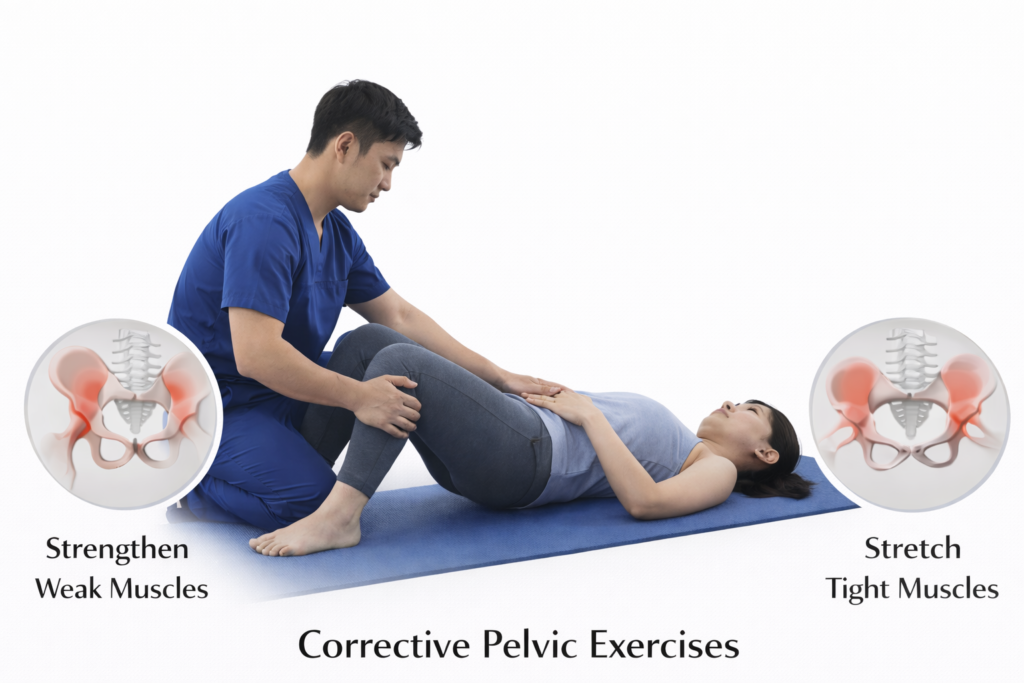
Pelvic posture plays a critical role in overall body
alignment and movement.
When the pelvis is tilted or imbalanced, it can place excessive stress on the
lower back, hips, and legs, often leading to chronic pain and postural asymmetry.
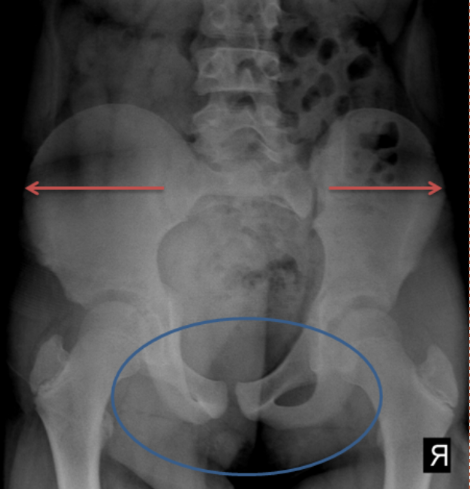
Our Pelvic Posture Clinic focuses on identifying muscle
imbalances around the pelvis and retraining the muscles responsible for pelvic
stability. Treatment emphasizes improving muscle length, strength, and control
to support better posture and more efficient movement.
Golf Rehabilitation Clinic
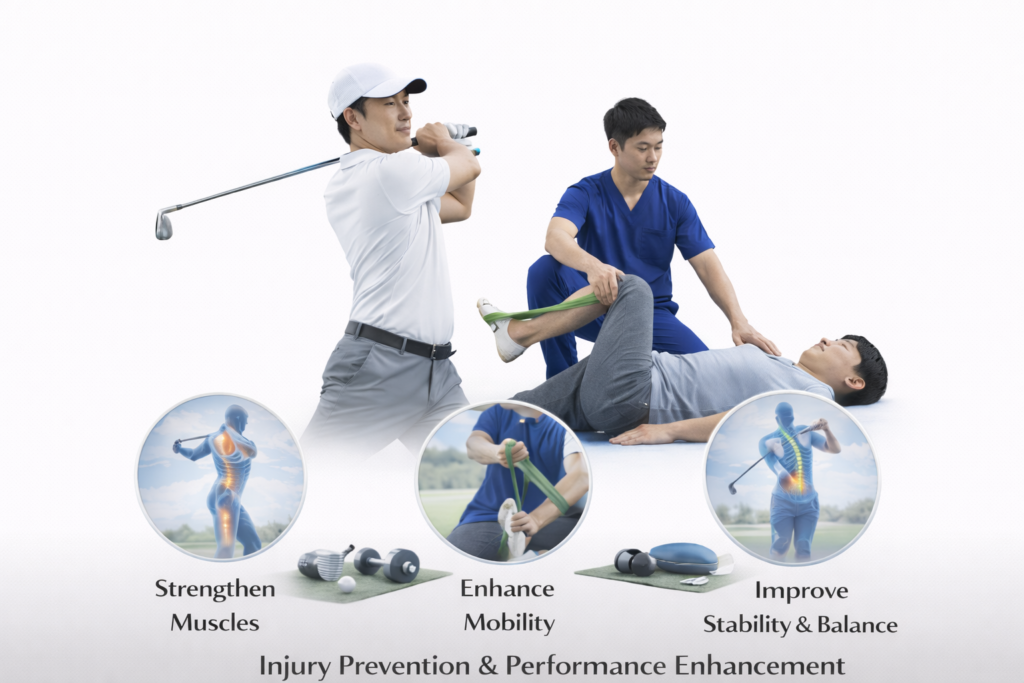
Golf requires precise posture, mobility, and coordinated
muscle control.
Poor posture or limited mobility can negatively affect swing mechanics and
increase stress on the spine, shoulders, and hips.
Our Golf Rehabilitation Clinic focuses on improving posture,
flexibility, and muscle coordination specific to golf movements. The goal is to
enhance swing efficiency, reduce pain, and support a safe return to play
through posture- and movement-based therapy.
Myofascial Pain Syndrome Clinic
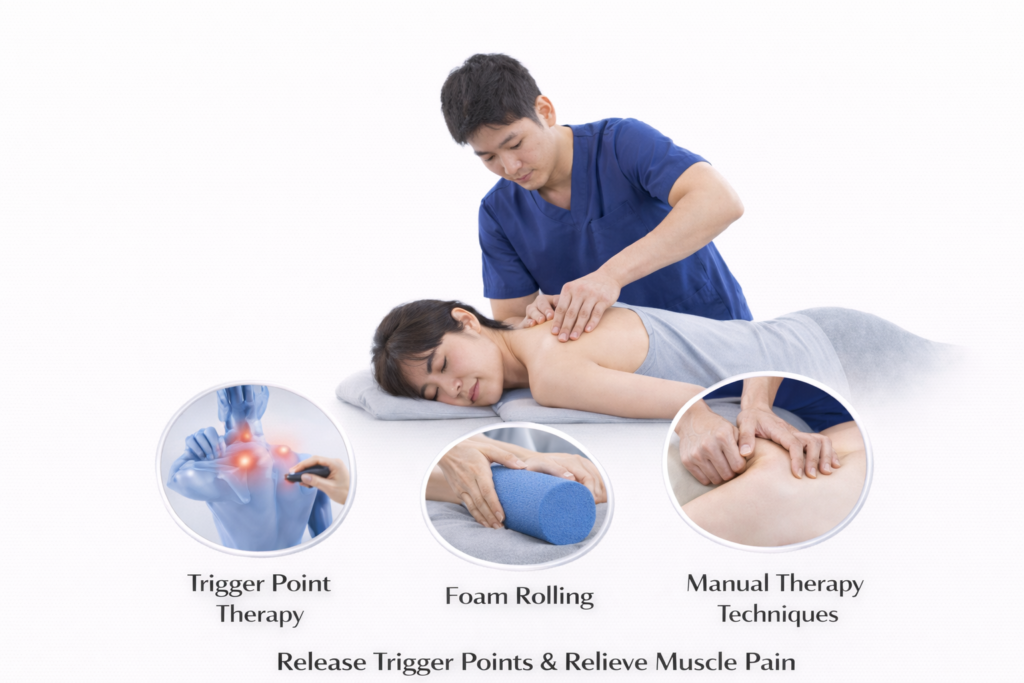
Myofascial Pain Syndrome is a condition characterized by tight, sensitive areas in muscles and connective tissue (fascia) that can produce localized or referred pain.
These trigger points and areas of restriction often develop due to poor posture, repetitive stress, and prolonged muscle overload, affecting how the body moves and supports itself.
Why myofascial pain develops
When muscles and fascia are placed under constant tension,
circulation and tissue mobility may become limited.
This can lead to:
Trigger points and muscle knots
Stiffness and reduced flexibility
Altered movement patterns
Increased stress on joints and surrounding tissues
Over time, these factors may contribute to persistent pain and reduced functional capacity.
Post-Surgical Knee Rehabilitation
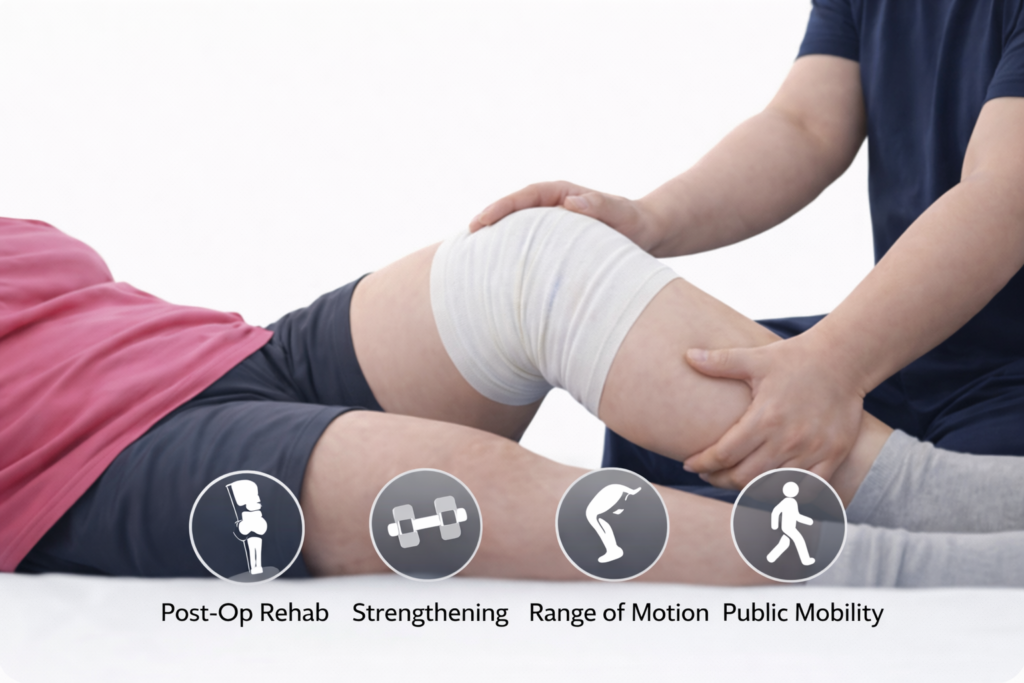
After knee surgery, many individuals experience weakness,
stiffness, altered walking patterns, and reduced confidence in movement.
Even when the surgical site heals, the surrounding muscles, joints, and
movement patterns often require structured rehabilitation to return to
normal function.
Why rehabilitation is essential
Following surgery, it is common for the body to develop protective
movement strategies that reduce stress on the knee.
While helpful initially, these patterns may lead to:
Muscle weakness
Joint stiffness
Poor gait mechanics
Increased stress on the hip, pelvis, and low back
Without proper retraining, these compensations can slow recovery and affect long-term mobility.
Post-Surgical Disc Rehabilitation
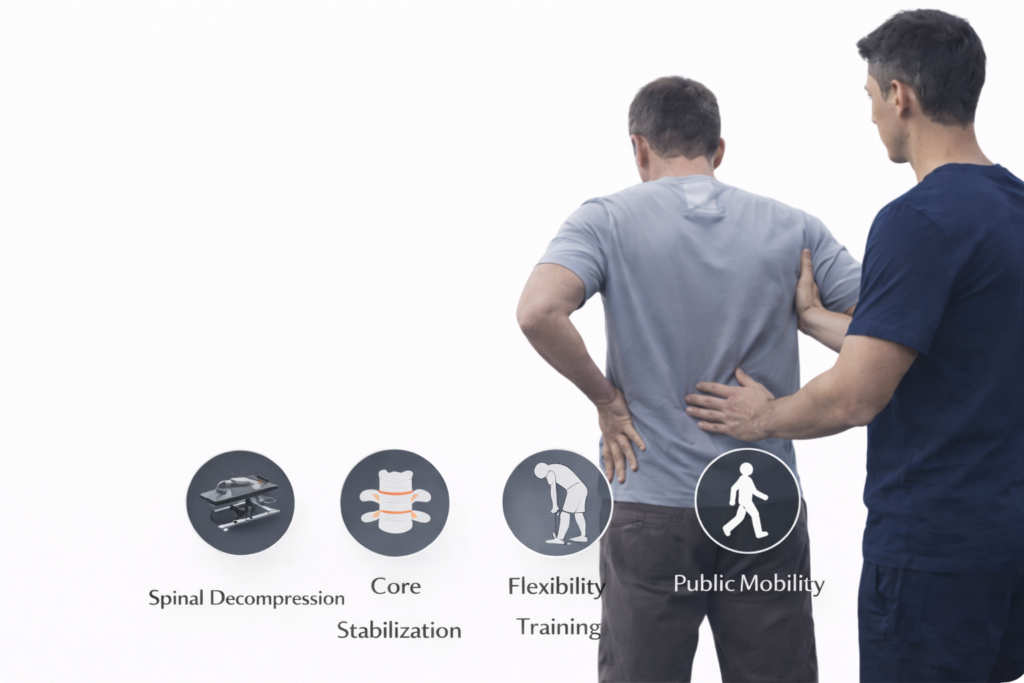
After disc surgery, many individuals continue to experience stiffness,
weakness, altered posture, and movement limitations.
Although the surgical procedure addresses the structural issue, the
surrounding muscles and movement patterns often require specialized
rehabilitation to restore function and prevent recurring strain.
Why rehabilitation is important
After surgery, the body commonly adopts protective
postures and movement patterns to avoid discomfort.
Over time, this can lead to:
Core and spinal muscle weakness
Reduced spinal mobility
Poor posture and movement habits
Increased stress on other spinal segments
These factors may affect long-term recovery and daily function if not properly addressed.
Recovery and pain levels vary by individual. Rehabilitation focuses on improving movement, posture, and functional capacity and does not guarantee specific outcomes.